Plastic mold design in Poggibonsi
Balmont provides plastic mold design in Poggibonsi, developing the technical design based on the features of the component the customer wants to produce. Work can begin with an idea, an existing sample, or a completed technical drawing.
Drawing on experience in the plastics industry since 1968 and professional software, Balmont turns the initial information into a structured digital model, defining the mold’s geometry, dimensions, and technical features.
From Idea to Digital Design
Every project starts with an analysis of the component to be developed. The information available may vary: a complete technical drawing, a physical sample, measurements and specifications, or an idea whose technical details are yet to be defined.
From these starting points, Balmont develops the 3D model, translating the component’s features into digital data that can be used in subsequent stages.
The plastic mold design in Poggibonsi is then tailored to the specific component, taking into account its shape, overall dimensions, size, and required features.
When starting from an existing sample, it can be used as a reference to digitally recreate the component. If a technical drawing is already available, the project can be developed directly from the specifications provided.
The goal of the design phase is to produce a clear, well-defined technical representation that brings together in a single model the information needed to develop the mold.
3D CAD Design and CAM Programming
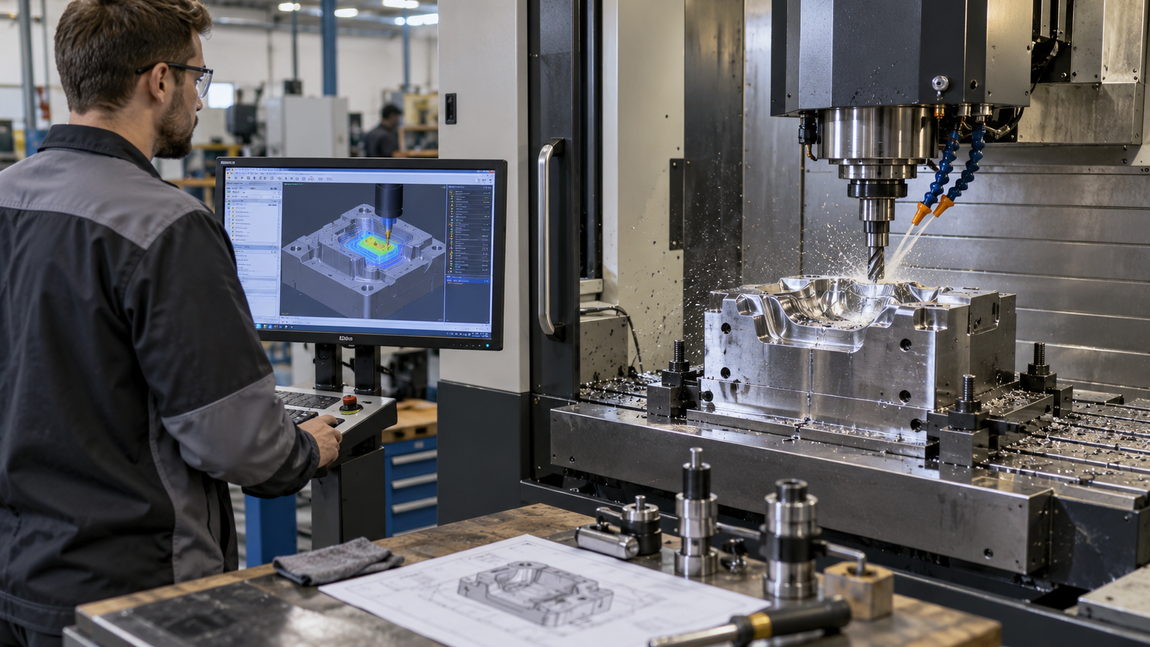
For project development, Balmont uses 3D CAD designsystems, which allow the component to be developed digitally and the mold geometry to be defined in detail.
3D modeling makes it possible to view the project from different angles, check dimensions and proportions, and adjust the geometry before moving on to subsequent operations.
Balmont uses SOLIDWORKS for design and 3D modeling. The software turns the initial information into a detailed technical model, supporting development of the various parts that make up the project.
CAD is complemented by CAM programming, carried out using ESPRIT software. The CAM system uses the digital model data to prepare toolpaths and machining strategies.
CAD and CAM therefore perform complementary functions: CAD is used to develop and modify the 3D model, while CAM translates the geometry defined in the design into technical data that can be used by machine tools.
Integrating the two systems ensures continuity between design and subsequent machining operations, using the data developed during modeling directly.
Mold design varies depending on the component to be produced. Dimensions, geometry, cavities, wall thicknesses, and technical requirements can make every project different from the last.
That is why Balmont develops every project based on the component specifications, rather than applying standard solutions to products with different requirements.
The initial phase therefore plays an important role: having accurate information makes it possible to set up the model correctly and define the project’s features more clearly.
To request an initial assessment, you can provide:
- a technical drawing;
- a component sample;
- measurements and dimensional specifications;
- information about the required shape and features;
- an idea to develop further from a technical standpoint.
The most suitable approach to developing the model is determined based on the material available.
Industry experience and the use of CAD and CAM tools enable Balmont to handle plastic mold design in Poggibonsi with a technical approach tailored to the specific features of every component.
Request Information
Contact Balmont to ask about plastic mold design in Poggibonsi and discuss the technical development of your project.
Frequently Asked Questions
What can the mold design process start from?
The project can start from an idea, a physical sample, a technical drawing, or the available measurements and specifications for the component.
Which software does Balmont use?
Balmont uses SOLIDWORKS for 3D CAD design and ESPRIT for CAM programming.
What is the difference between CAD and CAM?
CAD is used to develop and modify the 3D model, while CAM prepares the toolpaths and strategies for subsequent machining operations.
Can a project be developed from a sample?
Yes. The sample can be used as a reference to digitally recreate the component’s geometry and features.
What should I provide to request an assessment?
Drawings, samples, measurements, and technical specifications help define the project. Balmont can also start from preliminary information that needs further technical development.